Puma is a global sports brand with roles that fit both store operations and creative product work. If you are serious about applying for a Puma job, you need to understand the role types, pay ranges, and what hiring teams look for.
This guide covers retail and design paths, plus benefits and practical steps to apply. You will also get clear tips to help you stand out without overcomplicating your plan.
Understanding Puma As An Employer
Puma operates retail stores and corporate teams that support product design, marketing, and business operations. You will usually see a fast pace, clear goals, and strong focus on the customer and the product.
What Work Feels Like Day To Day?
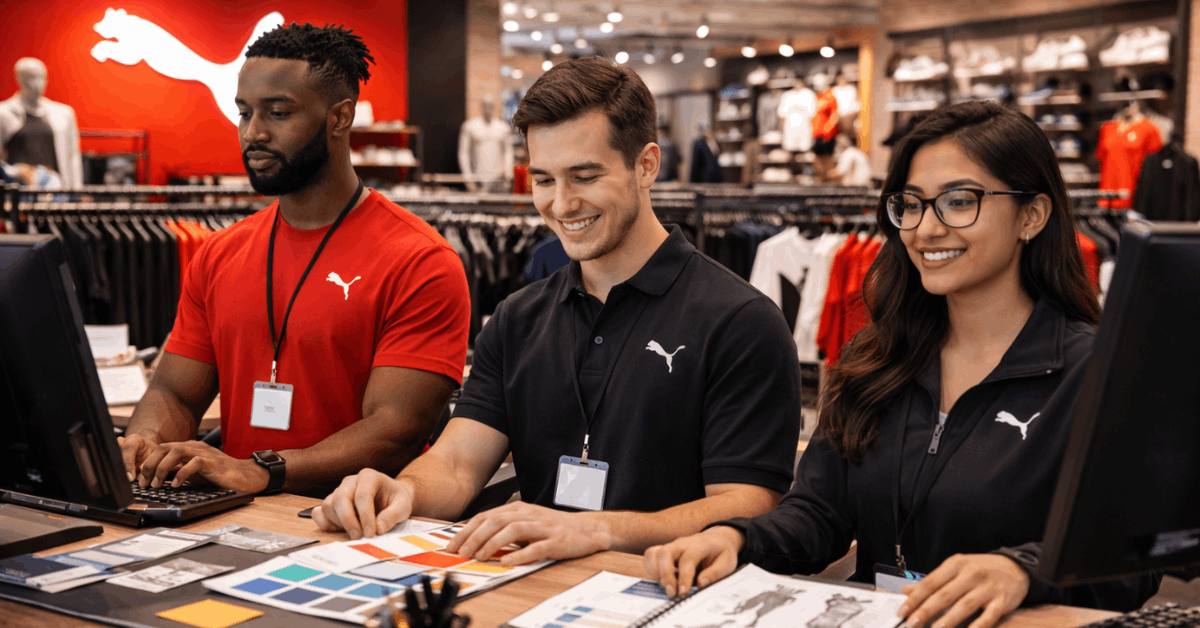
Retail teams focus on service, sales, and store standards, so your results are visible every shift.
Corporate and design teams focus on collaboration, deadlines, and building products that match the brand.
What Hiring Managers Usually Value?
They want proof you can deliver consistent work, follow standards, and communicate well.
For design roles, they also want a portfolio that shows strong thinking, not just good visuals.
Retail Roles At Puma
Retail jobs are store-based roles focused on customer experience, product knowledge, and hitting daily sales goals. These roles are a practical entry point if you want stable hours, a team environment, and promotion paths.
Retail Sales Associate
A retail sales associate supports customers by helping them choose items, answering questions, and completing checkout. You typically help with fitting, product comparisons, and basic inventory tasks.
In the United States, pay is often around $13–$17 per hour, depending on store location and experience. In many parts of Europe, it can be around €10–€15 per hour, depending on the country and labor market.
In Asia and other regions, rates vary by city and retail standards. Your results usually show through sales performance, customer feedback, and daily store routines.
Store Supervisor
A store supervisor supports store operations during shifts and helps guide the sales floor. You handle escalations, keep staff on pace, and help the team meet store targets.
In the United States, pay is often around $35,000–$45,000 per year, depending on store size and location. You may also see hourly supervisor roles in some markets, depending on how the store is structured.
This role is usually a step toward management if you perform well. Strong supervisors are consistent with standards, coaching, and customer handling.
Store Manager
A store manager leads the store team and owns daily performance, staffing, and operational compliance. You manage sales targets, store presentation, inventory health, and team development.
In the United States, pay is often around $55,000–$75,000 per year, depending on store volume and region. Some locations may include bonus structures tied to performance and store goals.
This role requires strong organization and leadership because your decisions affect the full store. If you want growth, this role builds skills that translate to broader retail management.
Design Roles At Puma
Design roles focus on creating footwear, apparel, and visual concepts that match Puma’s brand direction. These jobs usually require a relevant degree or strong portfolio, plus solid collaboration skills.
Product Designer
A product designer develops footwear or apparel concepts from idea to production-ready design. You work with research, material choices, fit, and performance needs while staying on brand.
In the United States, pay is often around $70,000–$100,000 per year, depending on level and location. You may see higher numbers in major hubs or for specialized experience.
Your portfolio should show process, not only final renders. Hiring teams want to see how you solve problems and build usable concepts.
Apparel Designer
An apparel designer creates clothing concepts that blend performance, comfort, and modern style. You usually work seasonally, aligning design direction with product calendars and category needs.
In the United States, pay is often around $65,000–$95,000 per year, depending on seniority and team scope. You should expect tight timelines, frequent revisions, and cross-team reviews.
Your best advantage is a portfolio that proves consistency across multiple product types. If you can show real-world constraints like materials and production, you look more job-ready.
Graphic Designer
A graphic designer creates visual elements used in branding, product graphics, and marketing materials. You may support apparel prints, campaign visuals, and retail design needs.
In the United States, pay is often around $60,000–$85,000 per year, depending on scope and experience. You should be comfortable with brand systems, layout work, and quick revisions.
Hiring teams often check how clean your typography and composition are, even if you are not working on text-heavy pieces. A strong portfolio shows range while staying consistent with brand quality.
Benefits Of Working At Puma
Benefits depend on the country, store format, and whether you are retail or corporate. Still, there are common benefits that show up across many markets.
Common Benefits You May See
Before accepting a role, you should understand the common benefits offered to employees. These benefits support your financial stability, work balance, and long‑term career development.
- Employee discounts allow you to purchase Puma footwear and apparel at reduced prices.
- Many positions include paid time off and holiday pay, depending on local labor laws and employment contracts.
- Some employees receive health insurance coverage or medical support programs based on region and job status.
- Certain locations provide retirement savings plans, such as pension contributions or 401(k) options.
- Puma often offers training programs and career development opportunities that help employees move into higher roles.
- Retail teams usually receive product knowledge and customer service training to improve store performance.
- Corporate teams may gain learning resources and cross‑department collaboration opportunities that support professional growth.
Basic Requirements And Skills
Puma requirements vary by role, but hiring teams usually focus on readiness and fit. You do not need to overthink it, but you do need to meet the basics and show proof.
Retail Role Requirements
You should understand the basic expectations before applying for a retail position. These requirements help hiring managers confirm that you can handle daily store responsibilities and customer interaction.
- A high school diploma or equivalent is usually required for most retail positions in Puma stores.
- Experience in customer service or sales helps you stand out during the hiring process.
- You should be able to work flexible shifts, including weekends and busy retail hours.
- Clear communication skills are important because you interact with customers and coworkers daily.
- Basic knowledge of POS systems, product displays, and inventory tasks is considered an advantage.
- Hiring teams value reliability and teamwork, since store operations depend on consistent staff support.

Design Role Requirements
Design positions focus on creativity, product development, and collaboration with different teams. You need both technical skills and a portfolio that proves your design process.
- Most roles expect a degree in fashion design, product design, graphic design, or a related field.
- If you do not have a degree, a strong design portfolio must demonstrate your skills and development process.
- You should be familiar with professional design tools and software used in product or apparel design.
- Your portfolio should show concept sketches, iterations, and final product development stages.
- Hiring teams expect evidence that you can accept feedback and improve designs through revisions.
- Employers also look for designers who can collaborate with marketing, engineering, and production teams.
How To Apply Step By Step?
You can apply through Puma’s official careers page or verified job platforms. Use the steps below to avoid missing key details and to keep your application clean.
- Start by searching for roles by location, job family, and keyword so you only apply to roles you match. Save the job link and job ID so you can track what you submitted.
- Build a resume that matches the job description, using similar skill terms without copying full lines. Keep it to clear achievements, not long story sections.
- If you are applying for design roles, attach a portfolio link that loads fast and is easy to scan. Put your strongest projects first and add short notes on your process.
- Submit the application with accurate details, then double-check your email and phone number for follow-up. If the system allows it, add a short, direct cover note that matches the role.
- Prepare for screening by reviewing the job post, your resume, and store or product basics. Be ready to explain your schedule, strengths, and what you can deliver.
Tips That Improve Your Chances
Most applicants fail because they look generic, not because they lack talent. Use the tips below to tighten your application and reduce mistakes.
- Customize your resume for the role type, so retail reads like service and sales, and design reads like process and collaboration. Remove unrelated details that dilute your message.
- Use proof points, like sales targets hit, customer issues resolved, or projects shipped. Numbers help, but clear outcomes work too.
- Practice simple interview answers that show you can solve problems and stay calm. Keep examples short and focused on actions you took.
- For design roles, explain your decisions and show iteration, not just final visuals. Hiring teams want to see how you think under real constraints.
- Follow up once if you have a contact method, and keep it polite and brief. A clean follow-up shows maturity without looking pushy.
Your Next Move With Puma
Getting hired is realistic if you stay focused and build a simple plan that matches the role you want. If you are committed to applying for a Puma job, you should align your resume, portfolio, and interview prep with what the hiring team actually checks.
Retail roles reward consistency and customer handling, while design roles reward process, collaboration, and production-aware thinking. Choose the best-fit role, apply cleanly, and keep your follow-through sharp.