Mango gets thousands of applications every year and most of those applicants do the same thing wrong. That global reach creates real opportunities if you know how the hiring process works. Knowing the process is half the battle.
Retail job guides tend to focus on polishing your resume. I think that’s the wrong starting point for a Mango application specifically. The brand looks for people who can sell a lifestyle, not just fold clothes. That distinction matters more than your CV formatting.


This guide is written for first-time job seekers and career changers targeting Mango in 2026. If you have applied before and heard nothing back, keep reading because the process has a specific rhythm that most applicants miss completely.
What Kinds of Jobs Does Mango Actually Hire For?
The bulk of Mango’s open positions are store-level, but the range is wider than people expect. A quick look at their Mango Careers page shows openings split across retail, logistics, and corporate functions.
- Store Sales Assistant is the entry point for the majority of applicants. Duties cover customer interaction, restocking, cashier work, and keeping the shop floor looking sharp. Reliability and social skills matter more than any formal qualification here.
- Visual Merchandiser roles go to people who understand how product placement drives sales. Creativity helps, but a sharp eye for current fashion trends is the real requirement.
- Warehouse and Logistics Staff handle stock management and back-end operations. These roles often involve early shifts and physical work. They are a legitimate way into the company if the shop floor is not your preference.
- Corporate and Support Functions sit mostly at Mango’s headquarters in Barcelona. Finance, HR, international marketing, and buying all have dedicated teams there. If you have specialized experience in any of those areas, the corporate route is worth pursuing separately from the retail track.

Does Location Change What Role You Can Get?
Yes, significantly. Mango’s global footprint means language requirements shift by country. Spanish is expected in Spain, with Catalan useful specifically in Barcelona.
German interviews are standard in Germany, French in France. Tourist-heavy cities tend to be more flexible about English.
Multilingual candidates frequently stand out in cities where stores serve international shoppers. If you speak two or more languages, lead with that in your application.
The Mango Hiring Process, Step by Step
Step 1: Online Application
All applications go through Mango’s official careers portal. The site lists openings globally and accepts submissions in multiple languages. Search “Mango Careers” or “Empleo Mango” to find it.
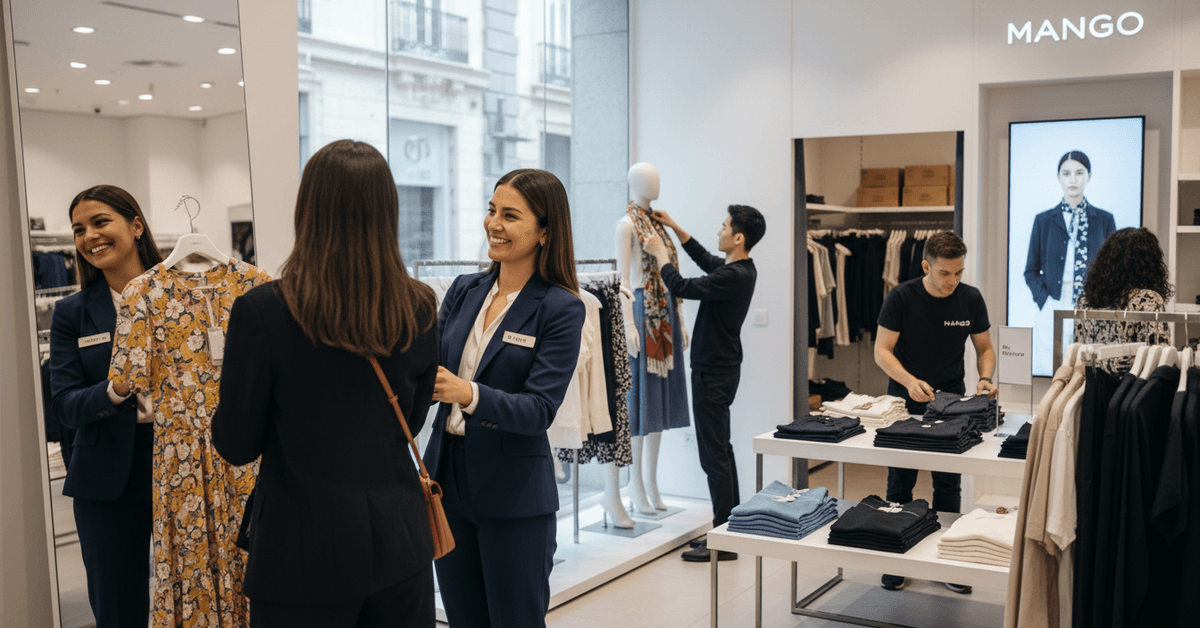
Fill the application out completely. Brief or rushed submissions get less attention from HR and store managers during screening.
Step 2: CV Screening
HR or the store manager reviews CVs for relevant experience, language skills, and availability. The screening is standard retail-level filtering. Clear employment dates, specific roles, and readable formatting all matter.
One thing I would do differently from the generic advice: skip the objective statement at the top of your CV entirely.
Mango’s hiring teams read dozens of applications and a generic paragraph about “seeking growth opportunities” wastes the only time you have to make an impression.
Step 3: Telephone Pre-Interview
Shortlisted candidates usually get a screening call first. It is brief. The caller confirms your availability, checks language ability, and gauges basic enthusiasm for retail work.
Respond promptly to any contact from Mango. Delays at this stage close opportunities fast.
Step 4: In-Store or Virtual Interview
The main interview covers customer service scenarios, teamwork situations, and your motivation for joining Mango specifically. Some locations include a basic role-play exercise. It is rare, but not surprising when it happens.
The questions you will almost certainly face:
- “Describe a time you delivered excellent service. What made it stand out?”
- “How would you handle a customer wanting to return a worn item?”
- “What interests you about Mango specifically?”
- “Tell us about a challenging work situation you managed.”
Step 5: Assessment or Trial Shift
Some stores invite candidates for a few hours on the shop floor before making a final decision. This is an observation exercise. Hiring managers watch for professionalism, how you interact with customers, and whether you fit the existing team.
I think the trial shift is where most applicants lose the job without realizing it. They prepare for questions but not for the actual work. Treat the trial shift like day one of a job you already have.
Step 6: Offer and Onboarding
Offers can arrive within days of a successful interview. During busy hiring periods, the timeline stretches. Paperwork, legal checks, and training arrangements follow. Start dates sometimes come with short notice, so be ready to move quickly.
The Application Tips That Actually Change Your Odds
A lot of Mango job guides tell you to “show passion for fashion.” I genuinely disagree with that advice.
Passion for fashion is not what gets you hired in retail. Demonstrable customer service instinct is what hiring managers at stores like Mango are actually looking for, and the two things are not the same.
Someone who has worked a busy café counter for six months has more useful experience than someone who follows fashion accounts online.
The café worker knows how to de-escalate an impatient customer under pressure. That skill transfers directly to the shop floor.
Practical things worth doing before you apply:
- List any retail or service experience, including part-time and volunteer work
- Mention language skills prominently, especially if applying in a European city
- Spend 20 minutes on Mango’s current collections so you can speak to a specific piece or campaign in the interview
- Tailor your CV or cover letter for retail specifically, not general employment
- Check your email and phone regularly after applying
Work permit requirements vary by country. EU citizens applying within Europe face a straightforward process.
Non-EU applicants should confirm local legal requirements before applying because Mango’s retail roles do not reliably come with visa sponsorship.
Pay, Perks, and the Honest Stuff About Work-Life Balance
Compensation at Mango follows standard retail rates for the region. Store assistants earn comparable wages to what other fashion retailers pay in the same city.
The brand sometimes offers sales bonuses, merchandise discounts, and limited benefits. Full-time contracts come with more perks than part-time arrangements.
Peak seasons mean overtime and weekend shifts are common. That is standard for retail globally, but worth knowing if you are applying for a role you expect to leave at 5 PM every day.
| Role | Work Type | Key Requirement |
|---|---|---|
| Sales Assistant | Store floor | Customer service, reliability |
| Visual Merchandiser | Store floor | Fashion trend awareness |
| Logistics Staff | Warehouse | Physical stamina, attention to detail |
| Corporate Functions | Barcelona HQ | Specialized professional experience |
The table above is not about pay grades specifically because those vary too much by country to list usefully. It is about matching the right profile to the right track before you apply.
Growth from entry-level to supervisor or manager is possible. Larger stores tend to offer more pathways than small boutique locations. Performance and reliability drive advancement more than any formal schedule.
One Thing No Other Mango Guide Mentions
Most job guides treat the application process as a one-time sprint. Apply, interview, wait. Repeat if needed. I think that framing sets applicants up for unnecessary frustration when they hear nothing back.
Mango’s hiring timelines shift with store seasons and business cycles. A store preparing for summer inventory expansion hires differently than one heading into a slow January.
Applying in late spring or early autumn, just before peak retail periods, puts your application in front of managers who actively need people. That timing factor is worth more than any resume tip I have seen in other articles on this topic.
Check Glassdoor reviews for Mango to get a read on what current and former employees say about specific store climates before you decide where to apply. Culture varies more between individual store managers than it does between countries.
Questions People Ask About Getting a Job at Mango
Q: Does Mango hire people with no retail experience? Yes, especially for sales assistant roles. Customer-facing experience from hospitality, cafés, or any service job counts. Frame it as customer service work, not as “unrelated” experience.
Q: How long does the Mango hiring process take? The timeline varies. Some applicants hear back within a week; others wait longer during peak hiring periods. A trial shift invitation usually signals the process is moving toward an offer.
Q: Do I need to speak Spanish to work at Mango? Only if you are applying to a store in Spain. Language requirements match the local market. English flexibility exists in tourist-heavy locations, but local language fluency is the safer assumption.
Q: Can I apply to multiple Mango locations at once? The careers portal allows applications to multiple listings. Applying to several stores in the same city is a reasonable strategy, especially if you are flexible on hours or contract type.
Q: What should I wear to a Mango interview? Dress in a way that fits the brand’s aesthetic. Mango’s style leans toward clean, contemporary, and put-together. An outfit from the current season sends a signal that you understand what the brand sells.
Conclusion
Landing a job at Mango takes preparation that goes beyond polishing your resume on a quiet Sunday afternoon.
The hiring process rewards people who understand the rhythm of retail hiring seasons and show up ready to work, not just ready to answer questions.
A trial shift is not a formality; it is the actual decision point in many stores. Getting the timing of your application right matters as much as the application itself.